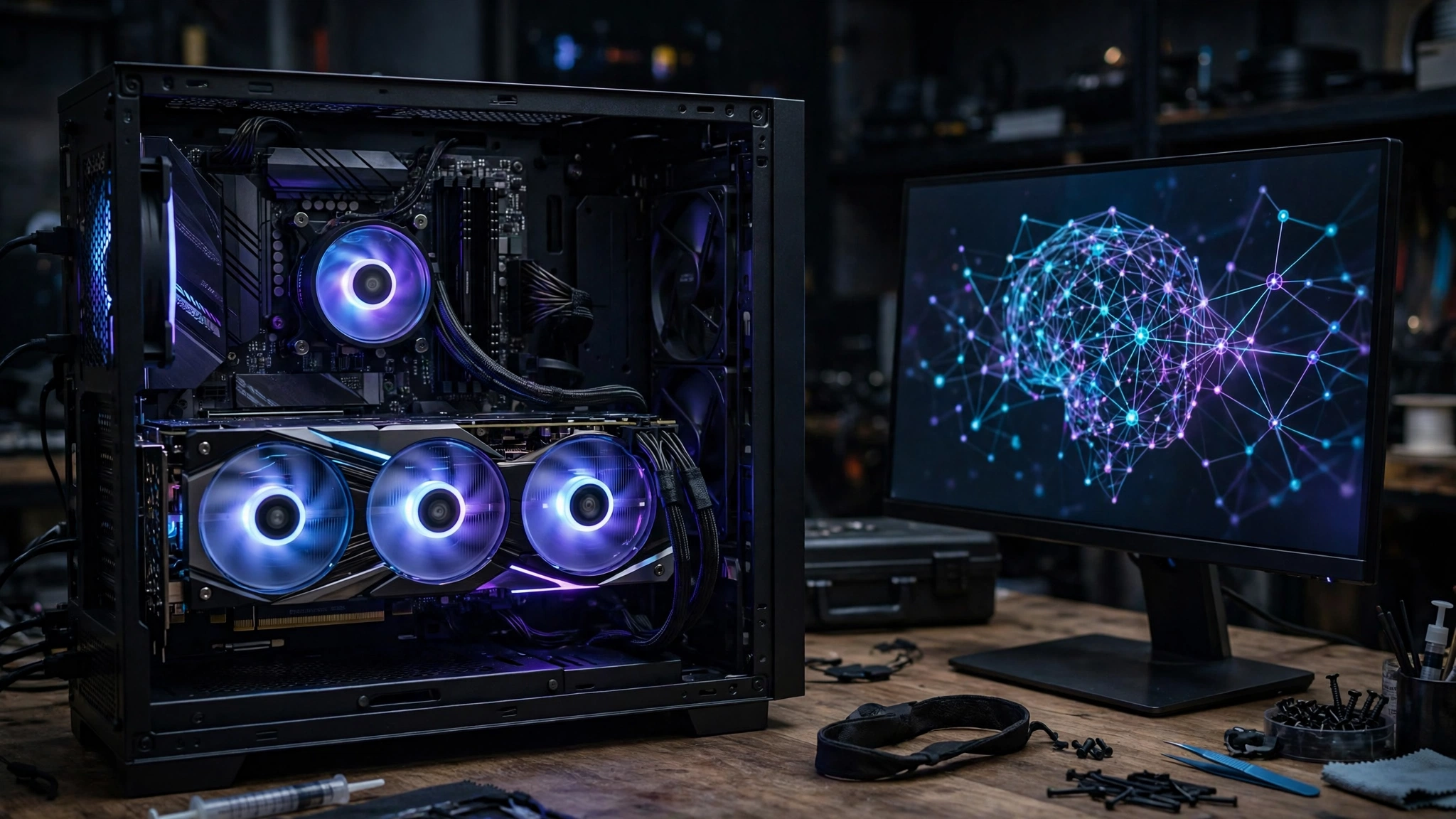
RTX 30 GPU Unlock Mod: Up to 80% More AI Speed
Your old gaming graphics card may be hiding a second life as an AI workhorse. The RTX 30 GPU unlock mod — an open-source project called GPU Unlock, published on GitHub by a developer known as Zagitta — claims to nearly double the AI compute throughput of NVIDIA’s GeForce RTX 30 series cards in certain workloads. With used RTX 3090 prices reportedly climbing and cloud GPU rental rates rising, the timing has caught the attention of everyone running AI models at home. Here is what the mod does, what the benchmarks actually show, which cards work, and the risks to weigh before you try it.
What the RTX 30 GPU Unlock Mod Does
The story starts with an artificial limit. According to the coverage, consumer Ampere graphics cards issue certain Tensor Core instructions — FP16 and BF16 math with FP32 accumulation, the bread and butter of AI inference — at a reduced rate compared with NVIDIA’s professional cards. The RTX 30 GPU unlock mod removes that restriction. It is not overclocking: reports stress that it does not push voltage or clock speeds beyond factory limits. Instead, it changes how fast one class of instructions can be issued.
The mechanism is clever. GPU Unlock is a Linux kernel module that runs before NVIDIA’s official driver loads. It writes new values to the GPU’s hardware speed selectors, performs a function-level reset, and then steps aside so the unmodified NVIDIA driver initializes the card normally. Because it never patches the driver or flashes the card’s firmware, users do not need to redo the process after every driver update — a major reason the project spread so fast after appearing earlier in October. It builds on earlier research into unlocking NVIDIA’s CMP cryptocurrency mining cards, combining that firmware work with the early-boot approach.
RTX 30 GPU Unlock Mod Benchmarks: What the Numbers Show
The headline numbers come from the project’s own repository, as reported by Wccftech, Notebookcheck and others — they are developer benchmarks, not independently verified tests, so treat them as best-case figures. On an RTX 3090 Ti at its stock 450W limit, dense BF16 compute jumps from 87.50 to 157.41 TFLOPS, an 80% gain. FP16 rises from 87.46 to 118.39 TFLOPS (up 35%), and TF32 from 42.58 to 82.61 TFLOPS (up 94%). An RTX 3080 is reported to climb from 65 TFLOPS to 110–113 TFLOPS in FP16/BF16 at its default 320W limit, and a community report puts an RTX 3090’s BF16 output at 129.6 TFLOPS after the unlock, up from 77.5.
Real-world AI workloads show smaller but still meaningful gains. In vLLM, the popular local inference engine, long-context prefill runs 33–36% faster and time-to-first-token drops about 25%, while decode speed — the token-by-token generation phase — is mostly unchanged. In ComfyUI image generation, reported gains land between 47% and 59%. That pattern matters: the mod speeds up the compute-heavy parts of AI work, not everything equally. Gamers should not expect a frame-rate miracle — this is an AI compute unlock, and its benefits show up in local models, not in games.
Which Cards Work — and Where Reports Disagree
The developer lists support for GA102, GA103, GA104 and GA106 GPUs, which covers a large part of the RTX 30 lineup, including the RTX 3060, 3070, 3080 and 3090 families. Compatibility and gains are not guaranteed on every card, and results will vary with the workload and the card’s power limit.
There is genuine disagreement in the coverage about newer cards, so be careful what you believe. One Wccftech report describes the tool as covering RTX 30 and RTX 40 cards, while another says RTX 40 and RTX 50 cards do not work. Separately, ThePCEnthusiast reports that similar experiments have now extended to the RTX 4090 and RTX 4070 Ti Super. The safest reading is that RTX 30 support is the established claim, RTX 40 support is experimental and contested, and RTX 50 support is not established at all. The project is Linux-only and carries an experimental label — Windows users are out of luck for now.
Why Now: Used Prices and Cloud Rental Costs
The RTX 30 GPU unlock mod arrived at a moment when AI compute is getting expensive everywhere else. One report notes that used RTX 3090 prices have climbed from around $1,000 to past $2,000 as buyers hunt for cheap local inference hardware — a figure that comes from a single market report, so treat it as a signal rather than a settled price. On the rental side, neocloud provider Nebius raised its on-demand H100 rate from $3.85 to $4.50 per GPU-hour on October 1, its second increase in three months, while a broader rental index put H100 prices at $2.50–$2.80 per hour in mid-October.
That economics explains the excitement. If you already own a three-to-five-year-old RTX 3090, unlocking up to 80% more AI compute for free beats renting cloud GPUs by the hour — and it is a big reason the project jumped from Reddit’s r/LocalLLaMA community to mainstream tech coverage within days. It also connects to the wider local-AI trend we have covered before, from NVIDIA’s DGX Spark 64GB desktop AI system to the RTX Spark AI PCs and Meta’s open-weight Muse Spark Open model: powerful AI is moving onto hardware people already own.
Risks Before You Try the RTX 30 GPU Unlock Mod
Enthusiasm aside, this is an experimental kernel module that touches your GPU before its driver loads, and the risks are real. First, stability: an experimental label means crashes, hangs or unexpected behavior are possible, especially on cards and workloads the developer has not tested. Second, support: running an unofficial kernel module could complicate warranty claims and driver support if something goes wrong, and NVIDIA has not publicly responded to the project in the coverage reviewed. Third, security: loading any kernel-level code from the internet demands care — inspect the source, understand what it changes, and never run a repackaged copy from an untrusted mirror.
There is also a practical warning. The gains are workload-specific: prefill and image generation improve, but decode barely moves, so a chatbot that generates long replies will not feel twice as fast end to end. And because the mod targets instruction issue rates rather than clock speeds, it will not rescue a card that is limited by memory capacity or power delivery. If your model does not fit in your card’s VRAM, no unlock fixes that.
Should You Try It?
For a Linux user already running local AI models on an RTX 30 card — especially a 3080, 3090 or 3090 Ti — the RTX 30 GPU unlock mod is one of the most interesting free upgrades of the year, with the caveat that you should test it on a spare setup first and keep backups of anything important. The mechanism is elegant, the reported gains are large in exactly the workloads local-AI users care about, and the no-driver-patching design makes it unusually low-maintenance for a mod.
For everyone else, the smart move is to wait. Windows support does not exist yet, RTX 40 support is contested, and independent verification of the benchmarks is still thin. The project is days old in public terms, and the coverage itself disagrees on key details. Watch for independent benchmarks and an NVIDIA response before treating this as settled science. But one thing is already clear: the cheapest AI accelerator of 2026 might be the graphics card sitting in your PC right now.
Also new today on corei10.com: Galaxy Z Fold 8 vs iPhone Duo: Which Foldable Wins?