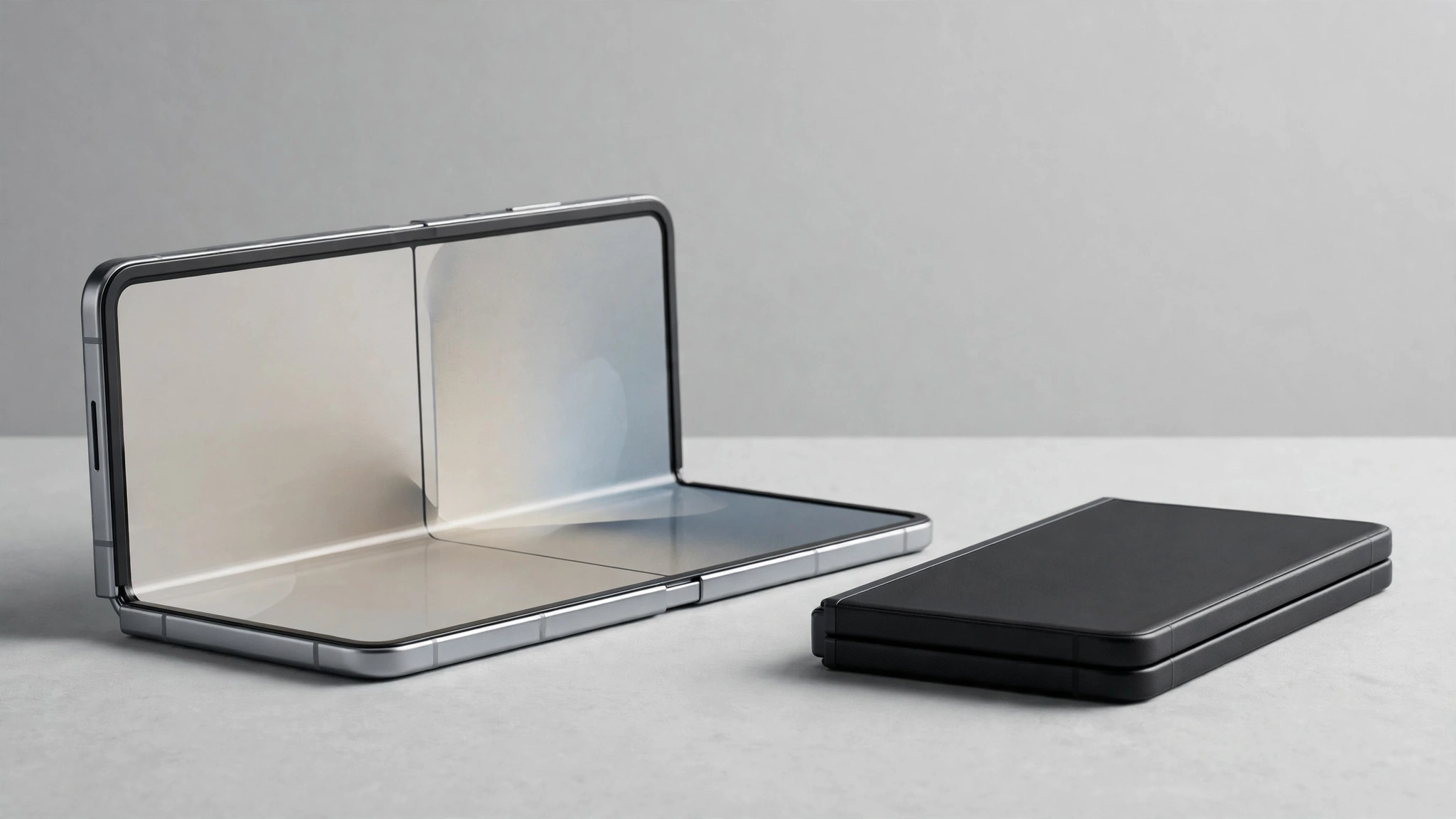
Galaxy Z Fold 8 vs iPhone Duo: Which Foldable Wins?
The Galaxy Z Fold 8 vs iPhone Duo debate is the biggest foldable question of 2026, and search interest proves it — the comparison is the top-trending technology topic in the US right now. Apple only just joined the foldable race with the iPhone Duo, which went on sale on October 23, while Samsung is already on its eighth folding phone. One is a first-generation statement piece; the other is a refined machine. Here is how they actually compare on price, design, displays, cameras, battery and durability — and which one deserves your money.
Galaxy Z Fold 8 vs iPhone Duo Price and Availability
Price is the first place Samsung wins. The Galaxy Z Fold 8 starts at $1,899 for 256GB of storage, rising through 512GB to a 1TB top model. The iPhone Duo starts at $1,999 for 256GB and climbs all the way to $3,199 for a 2TB version. That is a $100 gap at the entry level and a much wider one at the top end, since Samsung does not sell a 2TB Fold 8 at all.
Timing matters too. The Galaxy Z Fold 8 was announced on July 22, 2026 and went on sale on August 7, so it has months of real-world use behind it. The iPhone Duo was announced on September 9, opened for pre-order on October 16 and reached stores on October 23. If you want the full story of Apple’s launch, read our iPhone Duo pre-order guide: price, specs and ship date. Early buyers should also know about the launch-week screen reports covered in our iPhone Duo display break report.
Design and Displays: Thin vs Thinner
Both phones unfold into a small tablet, and both inner displays measure 7.6 inches with a 120Hz refresh rate and up to 3,000 nits of peak brightness. On paper, the screens are a tie. In the hand, they are not.
The Galaxy Z Fold 8 is the lighter and slimmer phone by a clear margin: 201 grams, 4.5mm thick when open and 9.7mm when closed. The iPhone Duo weighs 254 grams and measures 5.2mm open and 11.3mm closed. That 53-gram difference is something you will feel every time you pick the phone up, and it is the single biggest everyday advantage Samsung holds.
The cover screens tell a different story. Samsung’s is 5.5 inches, slightly larger than Apple’s 5.4-inch outer display, and both run at 120Hz. Apple’s trick is consistency: the Duo uses the same aspect ratio on both screens, so apps scale from the cover to the inner display without awkward reflowing. Samsung’s screens use different ratios — 10:16 on the cover, 4:3 inside — which can leave black bars on video. Apple’s inner display also uses a nano-texture finish to cut glare, and its selfie camera hides under the display rather than punching a hole through it.
Galaxy Z Fold 8 vs iPhone Duo Cameras
Neither phone tries to win on cameras alone, and both keep it simple with two rear lenses. The Galaxy Z Fold 8 pairs a 50MP main camera with a 50MP ultra-wide. The iPhone Duo pairs a 48MP Fusion main camera with a 48MP Fusion ultra-wide. Neither offers a dedicated telephoto lens, which is a notable omission at these prices — a regular flagship like the iPhone 18 Pro or Galaxy S26 will zoom further.
Selfies split the two. Samsung uses a 10MP cover camera and a 10MP inner punch-hole camera. Apple hides its inner camera under the display and uses a Center Stage camera on the outside. On megapixels alone, Samsung edges ahead; on clean, uninterrupted screens, Apple does. For most buyers, the cameras here are effectively even — this comparison will be decided elsewhere.
Performance and Battery Life
Under the hood, this is Apple’s 2nm A20 Pro against Qualcomm’s Snapdragon 8 Elite Gen 5 for Galaxy. Both are the fastest chips their makers have ever put in a phone, and both come with 12GB of RAM in the base models (Samsung offers 16GB on its 1TB Fold 8). In everyday use — multitasking, split-screen apps, video editing — neither will feel slow. Apple’s chip has the edge in efficiency on paper, while Samsung’s has the benefit of a mature foldable software stack built over eight generations.
Battery is where the spec sheets get slippery, so here is what is actually claimed. Samsung fits a 4,800mAh battery and claims up to 26 hours of use, with 45W wired charging that refills roughly 63% in 30 minutes. Apple does not publish a single milliamp-hour figure that comparisons agree on, so the honest number is its video claim: up to 44 hours of video on the outer display. Independent testing cited in comparisons put the Fold 8 near 17 hours of real-world use, a reminder that lab claims and daily life rarely match. If battery life is your top priority, neither foldable beats a conventional flagship — but Samsung’s numbers are easier to verify.
Durability: IP68 vs IP48
Durability is Apple’s strongest card. The iPhone Duo is the first foldable with a full IP68 rating, meaning it is sealed against dust and can survive submersion — Samsung’s Fold 8 carries IP48, which protects against larger particles and splashes but not a dunk in water. Apple also builds the Duo from grade-5 titanium with Ceramic Shield 2 protection, while Samsung uses Advanced Armor Aluminum with Gorilla Glass Victus 2.
There is a caveat, and it is a big one for a first-generation device. Within hours of the Duo’s October 23 launch, owners posted photos of cracks and bright lines along the hinge crease, and Apple had not publicly commented on the reports as of October 24. Our full breakdown of those iPhone Duo display break launch-day reports explains what is confirmed, what is not, and what Apple’s repair fees look like ($999 without AppleCare+, $99 with it). Samsung, by contrast, has eight generations of hinge engineering behind it — and that experience shows.
Software: iOS 27 vs Android 17
Software is where your existing ecosystem should decide for you. The iPhone Duo runs iOS 27, with Duo-specific features like Split View — two apps side by side, or two windows of the same app — and saved app pairs. It also supports Apple Pencil later in 2026. But Samsung has offered mature multi-window and Flex Mode for years, so Apple is catching up here rather than leading.
The Fold 8 runs Android 17 with One UI 9 and Samsung’s promise of seven years of updates, which beats Apple’s typical five-year window. Samsung also drops S Pen support on the Fold 8, so stylus fans lose out either way unless they wait for Apple’s Pencil support. If you live in Apple’s ecosystem, the Duo is the only foldable that keeps you there. If you live in Google’s, the Fold 8 is the natural pick — and Samsung’s longer update promise is genuinely better.
Galaxy Z Fold 8 vs iPhone Duo: The Verdict
So which foldable wins the Galaxy Z Fold 8 vs iPhone Duo fight? It depends on what you value most.
Buy the Galaxy Z Fold 8 if you want the lighter, slimmer, cheaper foldable with a proven hinge, a bigger cover screen, longer software support and a battery story you can actually check. At $1,899, it is the sensible choice for most buyers — the eighth-generation product that has already made its mistakes.
Buy the iPhone Duo if you are committed to Apple’s ecosystem, want the best water and dust resistance any foldable has ever offered, and value the seamless same-ratio screens and under-display camera. Just go in with your eyes open: it is a first-generation device at a first-generation price, and the launch-week screen reports are worth reading before you spend $1,999 or more.
For most people, the Fold 8 wins on value and refinement. For Apple loyalists, the Duo wins on ecosystem alone. Either way, the real winner is the foldable category itself — for the first time, there is a genuine choice at the top.
Also new today on corei10.com: RTX 30 GPU Unlock Mod: Up to 80% More AI Speed