Apple’s First Touchscreen Mac Is Real — and It Costs $2,899
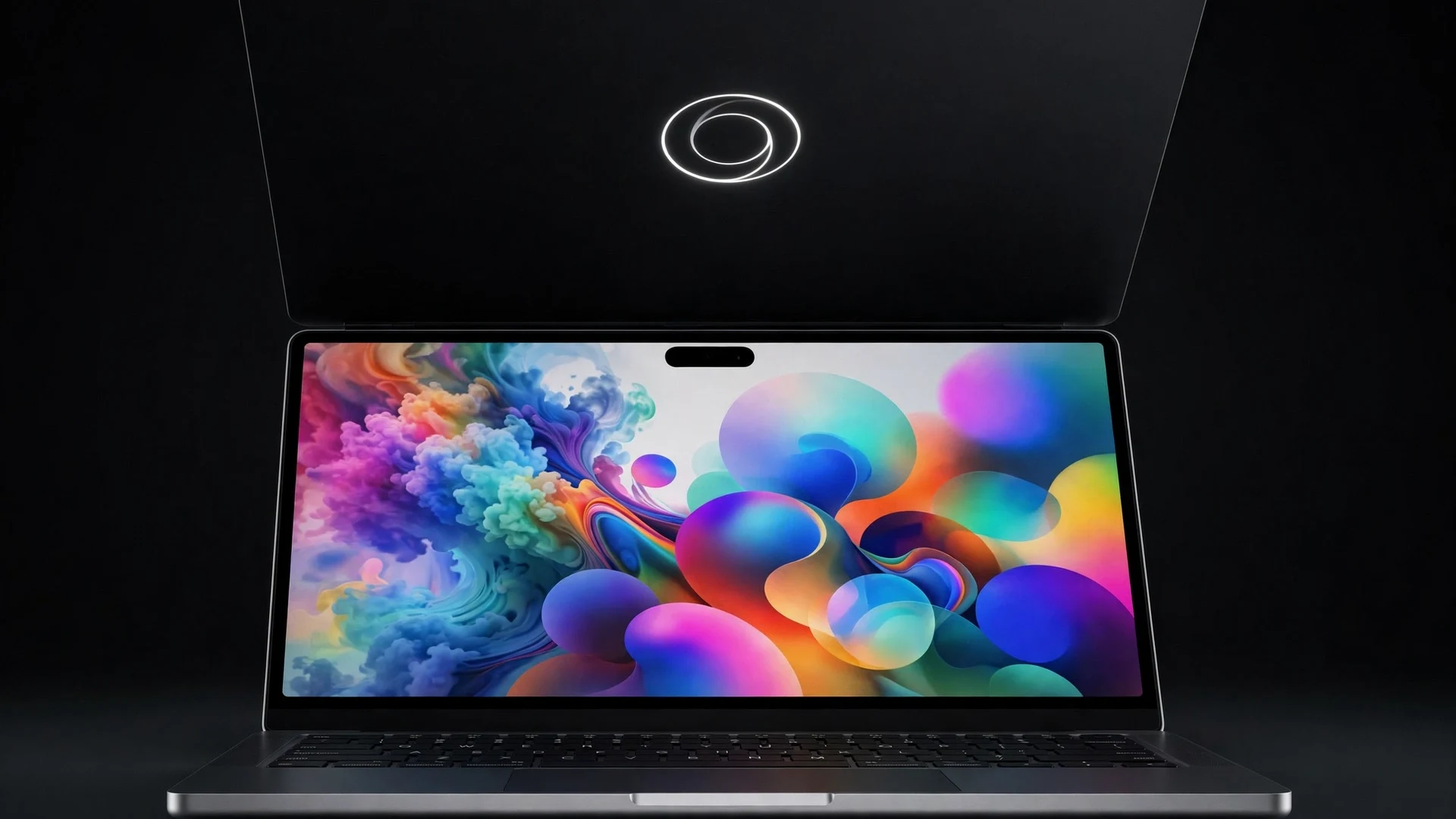
Apple has finally done the thing it spent years saying it would never do. On October 28, at its “Pro and tell” launch experience in Los Angeles, the company unveiled the MacBook Pro with PROLED XDR Display: the first Mac with a touchscreen, the first Mac with an OLED panel, and — in a nod to everyone who missed the old machines — a glowing Apple logo on the lid again. Pre-orders opened the same day, and the first machines arrive Friday, November 6.
This is not a rumor article anymore. Two weeks ago we previewed the October 28 event based on Bloomberg’s reporting; yesterday’s iPad mini launch was the warm-up act. Now the headline product is official, priced, and on sale — and the details are stranger and more interesting than the leaks suggested.
The screen is the whole pitch
Apple calls the panel PROLED XDR, a tandem OLED display — two layers of light-emitting pixels stacked together, the same approach it first used on the iPad Pro. The numbers Apple quotes are striking: up to 2,000 nits of peak brightness for both HDR and standard content, a 10,000,000:1 contrast ratio, ProMotion refresh up to 120Hz, and coverage of both the P3 and Adobe RGB color gamuts, the latter being the one print designers and photographers actually care about. A nano-texture finish is available as an option to cut glare.
Touch is built directly into the display panel rather than laid on top of it, and Apple says it added video stabilization so your camera feed doesn’t shake when you tap the screen during a call. The notch is gone, replaced by a Dynamic Island around a 12-megapixel Center Stage camera — the same pill-shaped cutout iPhone owners know, now home to Spotlight, Live Activities, and Siri AI on the Mac. Tap an AirDrop request, pause a song, glance at a live activity: that’s the idea.
In practice, most apps work with touch today because macOS translates a tap into a click. Apple’s own footnote puts dedicated touch updates for Microsoft Office, Zoom, Lightroom, and Blender later this year, which tells you where the company thinks touch will actually matter first: presentations, calls, photo edits, and 3D work, not replacing the keyboard and trackpad. Early hands-on reports add one notable absence: no Apple Pencil support, at least so far.
The chip choice is the surprise
Here’s the twist nobody quite predicted. The new machines run M5 Pro and M5 Max — the same chips from the standard MacBook Pros introduced in March — not the newer M6. That’s because, a day earlier, Apple put the M6 in the cheaper 14-inch MacBook Pro and the new iMac instead. So for the moment, the most expensive MacBook you can buy does not have Apple’s newest chip in it.
Is that a problem? Probably not for the buyers this machine is aimed at. M5 Pro and M5 Max remain among the most capable laptop chips Apple sells, configurable with up to 128GB of unified memory and storage up to 16TB, and Apple claims up to 24 hours of battery life. The new models are also thinner and lighter than the standard Pros in the same sizes — about 3 pounds for the 14-inch and 4 pounds for the 16-inch, according to early hands-on coverage — with Thunderbolt 5, Wi-Fi 7, Bluetooth 6, and a six-speaker audio system. The glowing logo, for what it’s worth, is back on both sizes in silver or space black.
The pricing, though, is where the room goes quiet:
- 14-inch, M5 Pro: from $2,899
- 16-inch, M5 Pro: from $3,399
- 14-inch, M5 Max: from $4,499
- 16-inch, M5 Max: from $4,799
Students and teachers pay $2,749 for the cheapest configuration. In Canada, where pre-orders opened in 30 countries and regions, the 14-inch M5 Pro starts at $3,999 CAD. Put another way, the touchscreen and OLED display cost $400 more than the equivalent standard MacBook Pro — the 14-inch standard model starts at $2,499, the 16-inch at $2,999 — and those standard models stay on sale. Apple is not forcing anyone onto touch. It’s charging a premium to the people who want it.
Who this is actually for — and who should wait
Buy this machine if you do visual work where touching the thing you’re editing is genuinely faster: scrubbing a timeline, dragging a slider, marking up a photo, moving slides around in a deck. The tandem OLED panel alone is a real upgrade for anyone grading video or retouching photos, and the Adobe RGB coverage is a deliberate signal to that crowd. If you’ve been holding a 2021-era MacBook Pro together with hope and dongles, this is a defensible jump.
Skip it — for now — if you just want the newest Apple silicon, or if your budget is anywhere near the standard models. The M6 14-inch MacBook Pro announced a day earlier is the better value for most people, and it arrives the same day, November 6. And if you mostly type, browse, and answer email, a touchscreen on a laptop remains what it has always been on Windows machines: nice occasionally, forgotten mostly. Wait for the first independent reviews to answer the question Apple can’t: whether macOS, an operating system designed for a pointer, feels natural under a fingertip after a week, not just during a demo.
What to watch next is straightforward. The first machines land November 6, and with them the first real-world verdicts on the display, the weight, and touch in daily use. Apple’s touch updates for Office, Zoom, Lightroom, and Blender are due later this year, and those will matter more to this machine’s story than any spec sheet. And the obvious question hangs over the whole lineup: when M6 Pro and M6 Max eventually arrive, does this PROLED model get them, or does Apple keep its fanciest screen one chip generation behind its fanciest silicon? For now, the Mac’s touchscreen era has a price tag, a ship date, and — at last — a product you can actually order.
Related: Apple’s October 28 event preview — what we expected before the announcement. iPad mini with A20 Pro — the other big launch from Apple’s October week. Touchscreen MacBook rumors — how the story developed. And Google’s own AI leap this week: Genie 4’s interactive worlds.