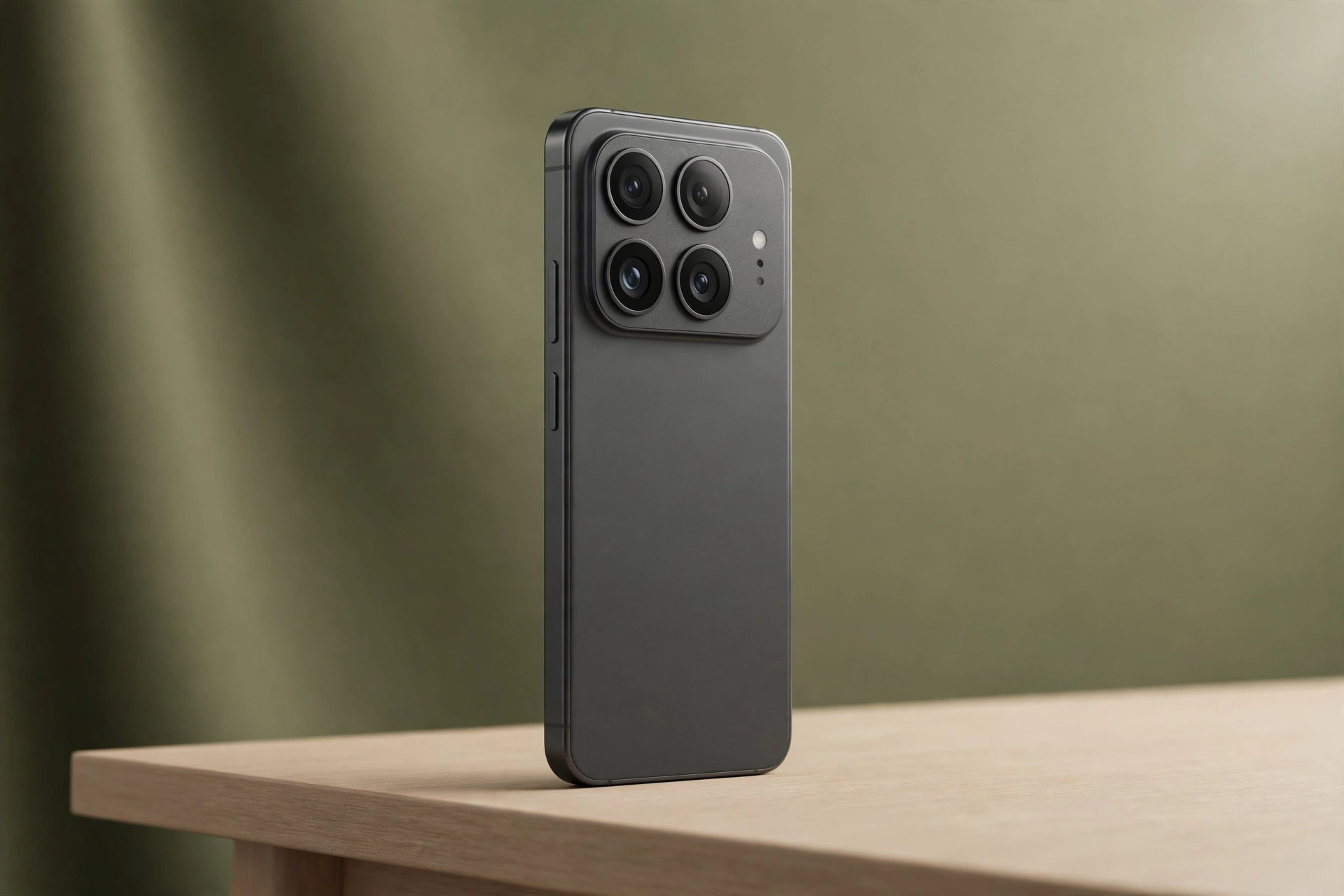
Motorola wants $1,599.99 for a phone. Not $1,599 for a foldable, not $1,599 for a phone with a stylus and a desktop mode — $1,599.99 for a slab. The Signature 27, announced today, is Motorola’s first genuine attempt at the ultra-premium tier in the United States, and the price is the whole story: it’s roughly 60% more than the original Signature, a phone that launched barely ten months ago and never even went on sale in America.
That is a gamble. Motorola is asking iPhone Pro Max money without Apple’s brand pull or Samsung’s carrier relationships in the US. Whether the gamble pays off depends on two numbers Motorola is very proud of — 12,000 and 7,000 — and on whether buyers believe either of them.
The price is the story
Let’s get the practical details out of the way first. In the US, the Signature 27 costs $1,599.99, and there is exactly one configuration: 12GB of RAM and 512GB of storage. No cheaper tier, no 256GB starter model, no 1TB option. Take it or leave it. Pre-orders open November 19 at Motorola.com, Amazon, and Best Buy, and the phone ships November 26. It will be sold universally unlocked; as of today, no major US carrier has confirmed it will carry the phone, which means no carrier subsidies and no trade-in deals at launch.
In the UK it costs £1,299.99, with pre-sales starting November 16 and shipping in Europe the same day. Canada, notably, gets nothing for now — Motorola told reporters there is “no availability in Canada at this time,” leaving the door open for a later launch. India, where the original Signature sold well, has no confirmed price or sale date yet; Motorola’s India site has confirmed only that the phone is coming in November.
For context, the original Motorola Signature launched in January 2026 at €999 in Europe and ₹59,999 in India. The Signature 27 is a second flagship in the same calendar year, and the jump is steep: roughly 60% more in Europe, and the US price of $1,599.99 puts it above the Galaxy S26 Ultra, which launched at $1,299 and now sits at $1,399.99 after Samsung’s own price rise. Motorola is pricing against the iPhone 18 Pro Max and the Pixel 11 Pro XL — the most expensive phones on the market — and betting that the spec sheet justifies it.
A screen that outshines everything — on paper
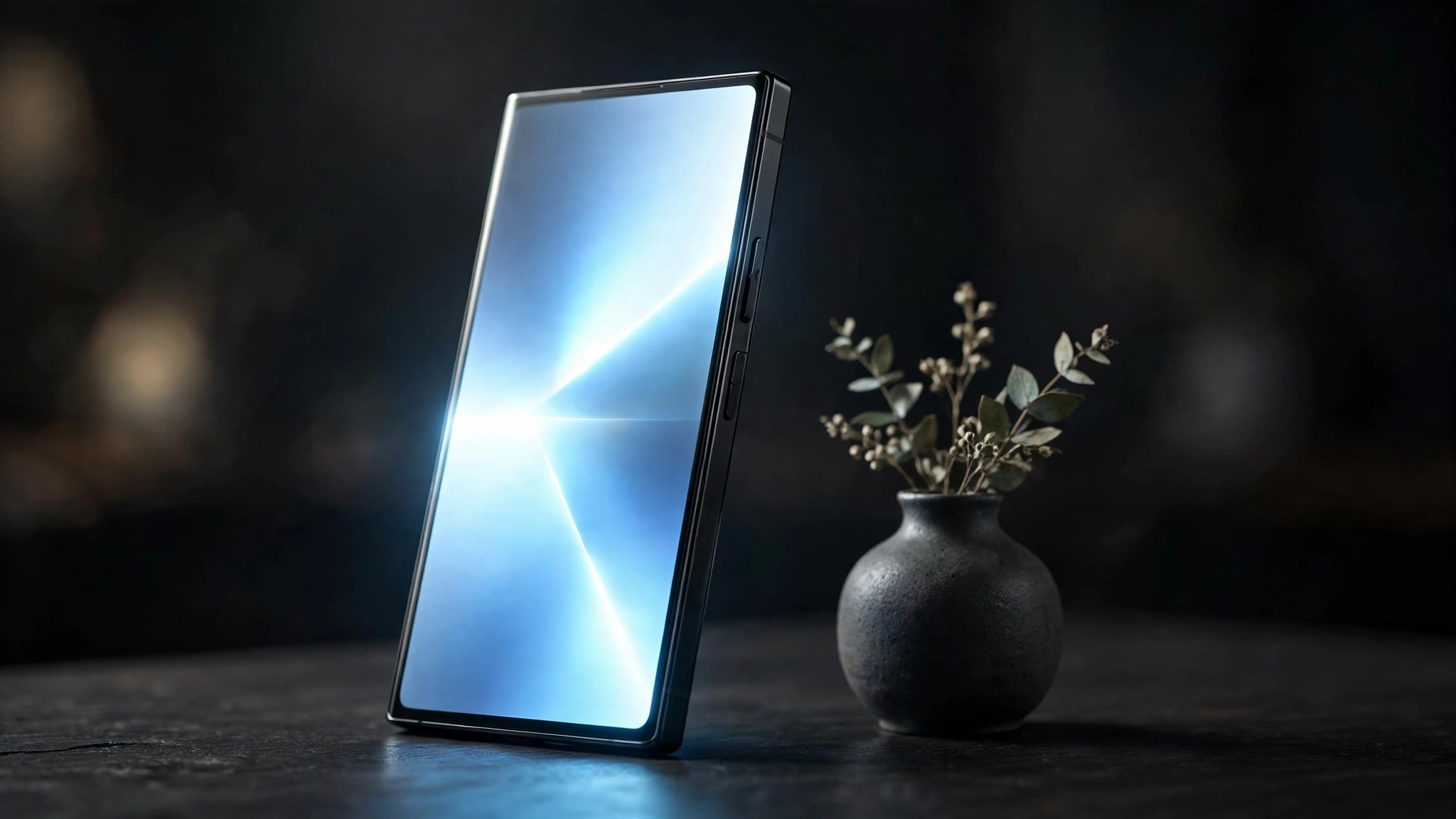
The headline spec is the display, and it is genuinely remarkable on paper. The Signature 27 has a 6.8-inch Extreme AMOLED Duo panel — a tandem OLED, meaning two light-emitting layers stacked on top of each other — with a 1.5K resolution (2780×1264), up to 120Hz with LTPO, Dolby Vision, HDR10+, 100% DCI-P3 colour, Pantone Validated Color, 449 ppi, 2,160Hz PWM dimming, and Gorilla Glass Ceramic 3 on top.
And then there’s the number Motorola wants you to remember: 12,000 nits of peak brightness. For comparison, the iPhone 18 Pro Max is rated at 3,000 nits, the Galaxy S26 Ultra at 2,600, and the Xiaomi 18 Pro Max at 4,000. Motorola claims the Signature 27 has the brightest display ever put in a smartphone.
Here is the part that matters. That 12,000-nit figure is a small-area peak — the brightness the panel can hit when only a tiny portion of the screen is lit. It is not the brightness of the whole screen in sunlight, and Motorola has not published a full-screen figure. There is also an awkward precedent: the original Signature was advertised at 6,200 nits, and GSMArena’s lab measured 1,518 nits in real use — about a quarter of the claim. No independent measurement of the Signature 27 exists yet, and none will until review units circulate. Even heavily discounted, this is almost certainly the brightest phone screen you can buy. But treat “12,000 nits” the way you’d treat any peak figure on a spec sheet: as a ceiling measured in ideal conditions, not a promise about what you’ll see on a sunny sidewalk.
One more display detail worth noting, because it’s a step backwards: the panel tops out at 120Hz. The original Signature had a 165Hz display. For most people this changes nothing — 120Hz is what every other flagship uses — but it’s a curious spec-sheet downgrade on a phone that costs 60% more than its predecessor.
The battery and chip are the real flex
If the screen is the headline, the battery and chip are the substance. The Signature 27 packs a 7,000mAh silicon-carbon battery — 6,790mAh rated — which is 35% larger than the original Signature’s battery and dwarfs the Galaxy S26 Ultra’s 5,000mAh and the iPhone 18 Pro Max’s 5,567mAh. It charges at 90W wired and 50W wireless, with 5W reverse wireless and 4.5W reverse wired. Motorola claims 66 hours of usage per charge and “enough power for the day in 12 minutes.” Both are manufacturer claims, untested by anyone outside Motorola so far — but even if the real-world figure is half the claim, this is a two-day phone for most people.
Inside is Qualcomm’s Snapdragon 8 Elite Extreme Gen 6, the 2nm flagship chip Qualcomm announced in September. That matters more than it sounds: the chip is a full generation ahead of the Snapdragon 8 Elite Gen 5 in the Galaxy S26 series, which makes the Signature 27 — at least on paper — the fastest Android phone you can buy right now. Motorola pairs it with 12GB of LPDDR5X RAM in North America (up to 24GB with RAM Boost), 512GB of UFS 4.1 storage, and a vapor chamber Motorola calls ArcticMesh that is 40% larger than the one in the original Signature. Global variants go up to 16GB of RAM and 1TB of storage, so the US single-config approach is a deliberate choice, not a hardware limit. Wi-Fi 8 and UWB round out the connectivity.
Software is Android 17 with Gemini Intelligence and Motorola’s own Qira assistant, and Motorola is promising seven OS upgrades and up to seven years of security updates — matching Samsung’s commitment and a long way from the update policies Motorola was criticised for five years ago. The phone also supports GrapheneOS, previously a Pixel-only option, which will matter to a small but vocal slice of buyers.
Cameras: a 200MP periscope and a world-first sensor
The camera system is where Motorola is trying hardest to look like a camera company. The main sensor is a 50MP Sony LYTIA L910 with an f/1.6 aperture, LOFIC support for holding bright skies and dark shadows in one shot, and up to 8K video. Next to it sits a 50MP ultrawide with a 122-degree field of view and a 200MP periscope telephoto with 3x optical zoom and up to 100x Super Zoom Pro. The front camera is 50MP.
The unusual piece is a dedicated EVS action sensor, which Motorola claims is a world-first in a smartphone, designed to freeze fast-moving subjects. Motorola also claims a DxOMark Gold Label for image quality. Both claims are exactly that — claims. No independent camera testing exists yet, and the original Signature’s camera was good but not class-leading. The hardware is impressive; the results are unproven. If you’re buying this phone for the camera, wait for the first reviews.
Audio gets the same flagship treatment: Bang & Olufsen tuning, coaxial stereo speakers, Dolby Atmos, Hi-Res Audio, Snapdragon Sound, and five microphones. Motorola claims it’s the only phone with Bang & Olufsen audio. The build is ceramic, glass, and aluminum, rated IP68 and IP69, with an ultrasonic in-display fingerprint reader. At 227g and 7.99mm thick, it’s heavy but not absurd for a phone with a 7,000mAh battery inside. Two finishes are available — PANTONE Coal Smoke with a “tactical weave” texture and PANTONE Capulet Olive with a “brushed textile” finish. There is no microSD slot and no headphone jack, and the phone is Qi2-ready but has no built-in magnets, so MagSafe-style accessories will need a magnetic case.
The catches: Canada, 120Hz, and no magnets
Stacked up, the Signature 27 is the most ambitious phone Motorola has ever made. It’s also a phone with a list of small print worth reading before you pre-order. No Canada launch at announcement. No carrier deals, so the full $1,599.99 is due upfront. A single configuration in North America. A 120Hz display where its predecessor had 165Hz. A headline brightness figure that is a small-area peak, untested by anyone independent. Camera claims — the EVS sensor, the DxOMark Gold Label — that are Motorola’s word for now. And a price that is 60% higher than the phone it replaces, for a brand that has never sold a $1,600 phone in the US before.
None of that makes it a bad phone. It makes it a phone to buy with your eyes open, and ideally after the first round of reviews lands.
Who should buy it, and who should wait
The Signature 27 is for a specific buyer: someone who wants the brightest screen and the biggest battery in a flagship phone, who values the newest Qualcomm chip over brand familiarity, and who is comfortable paying full price upfront through Motorola, Amazon, or Best Buy. If that is you, the pre-order date is November 19, and the phone ships November 26.
Everyone else should wait. A discounted Galaxy S26 Ultra — now $1,399.99 — buys you a proven camera system, carrier deals, and a brand your carrier actually stocks, for $200 less. And the Signature 27’s own claims, from the 12,000-nit screen to the 66-hour battery to the camera, all need independent testing before they are facts. Motorola has built its most serious flagship ever. Now it has to prove it is worth $1,600.
Also today on corei10.com: the Ocarina of Time remake launches on Switch 2 with a 96 on Metacritic. For the full backstory on this phone, see our Motorola Signature 27 preview from November 2 — and if you want another spec-first Android flagship for comparison, our OnePlus Ace 7 Pro breakdown from October 31.
Google’s November Pixel Drop brings Gemini Intelligence to the Pixel 10 — and to the Motorola Signature 27.